Google Cloud explained
Build, host, and scale apps on Google's global cloud.
Google Cloud is a set of computing, storage, networking, data, and AI services that run on infrastructure built for Google-scale products. It helps teams deploy websites, APIs, databases, containers, analytics pipelines, and machine learning systems without buying their own data centers.
Hosting services
Choose the right level of control
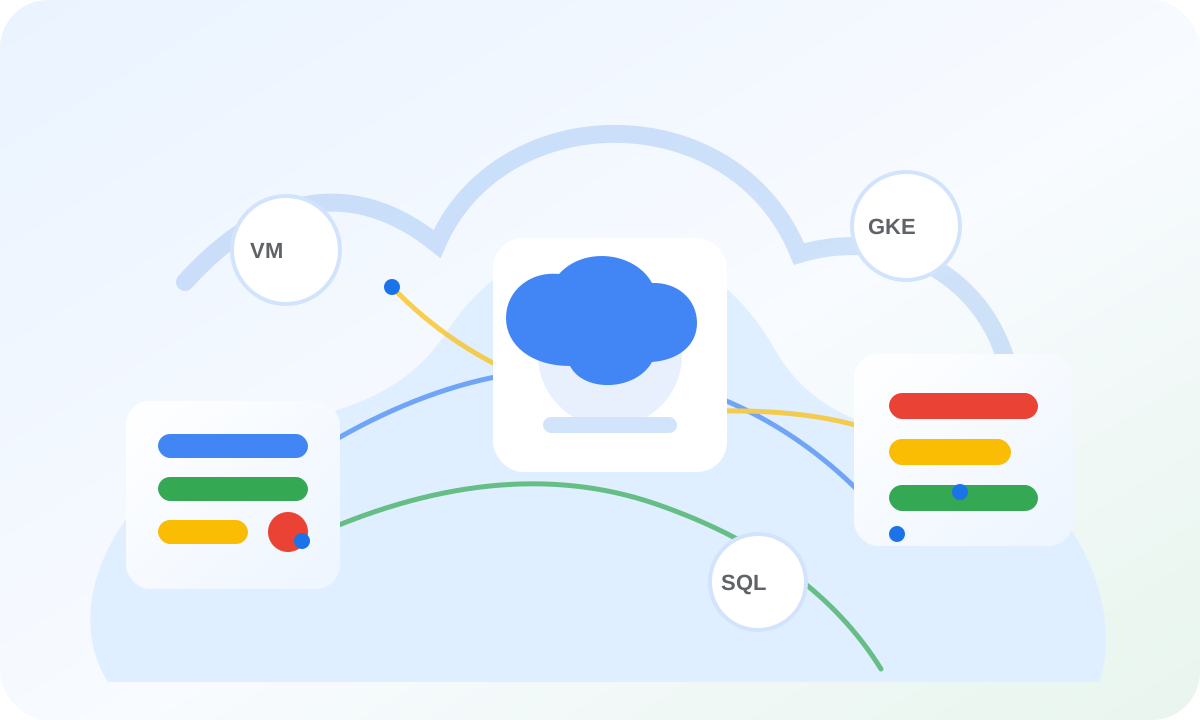
Google Cloud hosting is not one single product. You pick from managed platforms, virtual machines, containers, and serverless tools depending on how much infrastructure you want to manage.
Cloud Run
Deploy containerized web apps and APIs without managing servers. It automatically scales up for traffic and scales down when idle.
Compute Engine
Run virtual machines when you need operating-system control, custom networking, GPUs, or traditional server workloads.
Google Kubernetes Engine
Operate container clusters with Kubernetes for microservices, rolling deployments, service discovery, and resilient scaling.
App Engine
Host applications on a managed platform where Google handles infrastructure, patching, load balancing, and scaling.
Cloud architecture
Regions, zones, and services work together
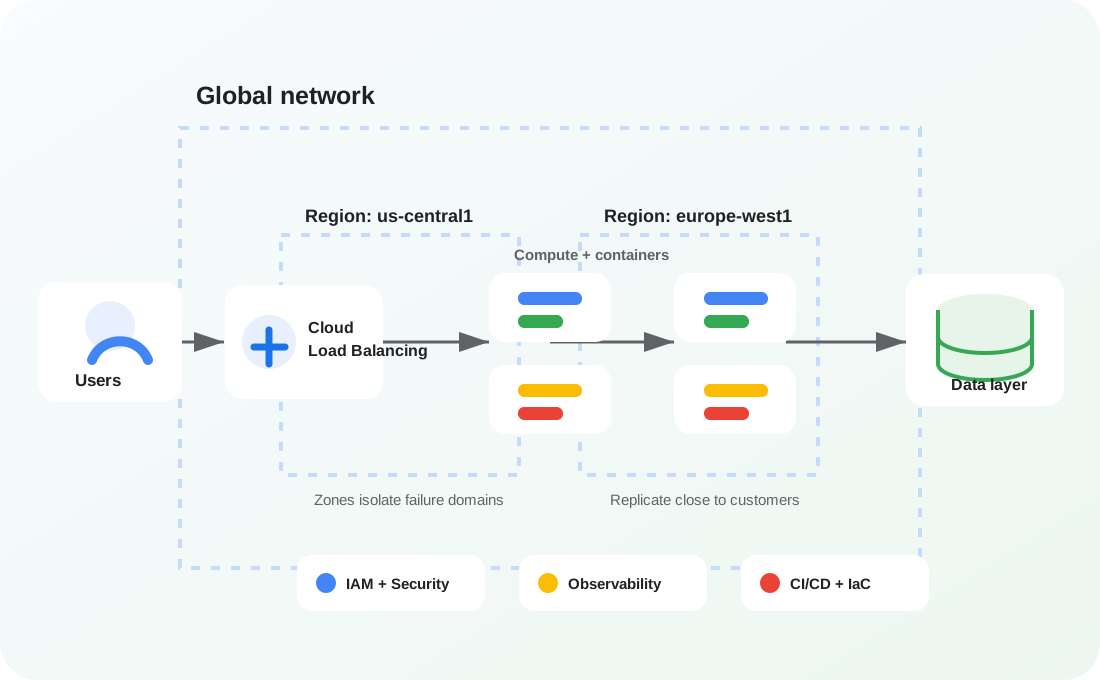
Under the services are physical machines in data centers. Google Cloud organizes them into global resources, geographic regions, and zones. A zone is designed as an isolated failure domain, while zones in the same region are connected with high-bandwidth, low-latency networking.
- Global resources like VPC networks can span regions.
- Regional resources keep apps close to users and data residency needs.
- Zonal resources, like many VM disks, live with the compute that uses them.
How it was made
From Google's internal systems to a public cloud
Google built massive infrastructure for its own products
Search, Gmail, YouTube, Maps, and Docs needed fast global networks, custom data centers, distributed storage, and automated operations.
Those patterns became cloud services
Google exposed building blocks such as compute, storage, databases, networking, analytics, AI, and developer tools as managed services.
App Engine started the platform era
Google announced App Engine in 2008 as an early way to develop and host apps in Google-managed data centers. More services were added over time.
The platform evolved for modern apps
Today, teams combine serverless hosting, Kubernetes, VMs, managed databases, observability, security, and AI tools into production architectures.
Simple mental model
Google Cloud gives you building blocks, not just servers.
You design an app by choosing services, placing them in the right regions and zones, connecting them through secure networks, and letting managed systems handle scaling, reliability, monitoring, and updates.